
Why Modular Data Centers Are Changing the Way We Think About Edge Infrastructure
August 5, 2026
As organizations continue to expand artificial intelligence (AI), edge computing, broadband, and cloud services, infrastructure deployment is changing just as quickly. The traditional model of building permanent facilities designed for decades of growing is giving way to something more flexible.
Today’s networks demand infrastructure that can be deployed faster, adapt to changing capacity needs, and perform reliability in a wide range of environments. That shift is one reason modular data centers are becoming an increasingly important part of modern edge strategies.
Why Traditional Deployments Are Becoming More Challenging
Building edge infrastructure has never been as straightforward as placing equipment in a shelter. Operators must balance tighter project schedules, growing power requirements, increasing compute density driven by artificial intelligence workloads, and unpredictable future demand.
Many organizations face questions such as:
- How do we deploy infrastructure faster?
- How do we avoid overbuilding for capacity we may not need yet?
- How can cooling scale as workloads increase?
- How do we reduce transportation and installation costs?
These challenges drive interest in modular design that allow infrastructure to grow alongside the network.
What Makes a Modular Data Center Different?
Unlike traditional facilities designed as permanent structures, modular data centers are integrated systems that can be transported, installed, and expanded more efficiently.
A well-designed modular solution with structural integrity offers:
- Faster deployment compared to traditional construction
- Flexible configurations for different applications
- Scalable power and thermal management
- Simplified transportation and installation
- Lower long-term infrastructure costs
Rather than committing to a fixed design from the start, operators can expand capacity as business needs evolve.
The Importance of Designing for Growth
One of the biggest advantages of modular infrastructure is flexibility.
As workloads change, infrastructure should be able to adapt without requiring a complete redesign. Scalable thermal management, flexible equipment layouts, and modular power systems help organizations add capacity over time while maintaining operational efficiency.
This “grow as you go” approach has become especially valuable for edge deployments, where future demand can be difficult to predict.
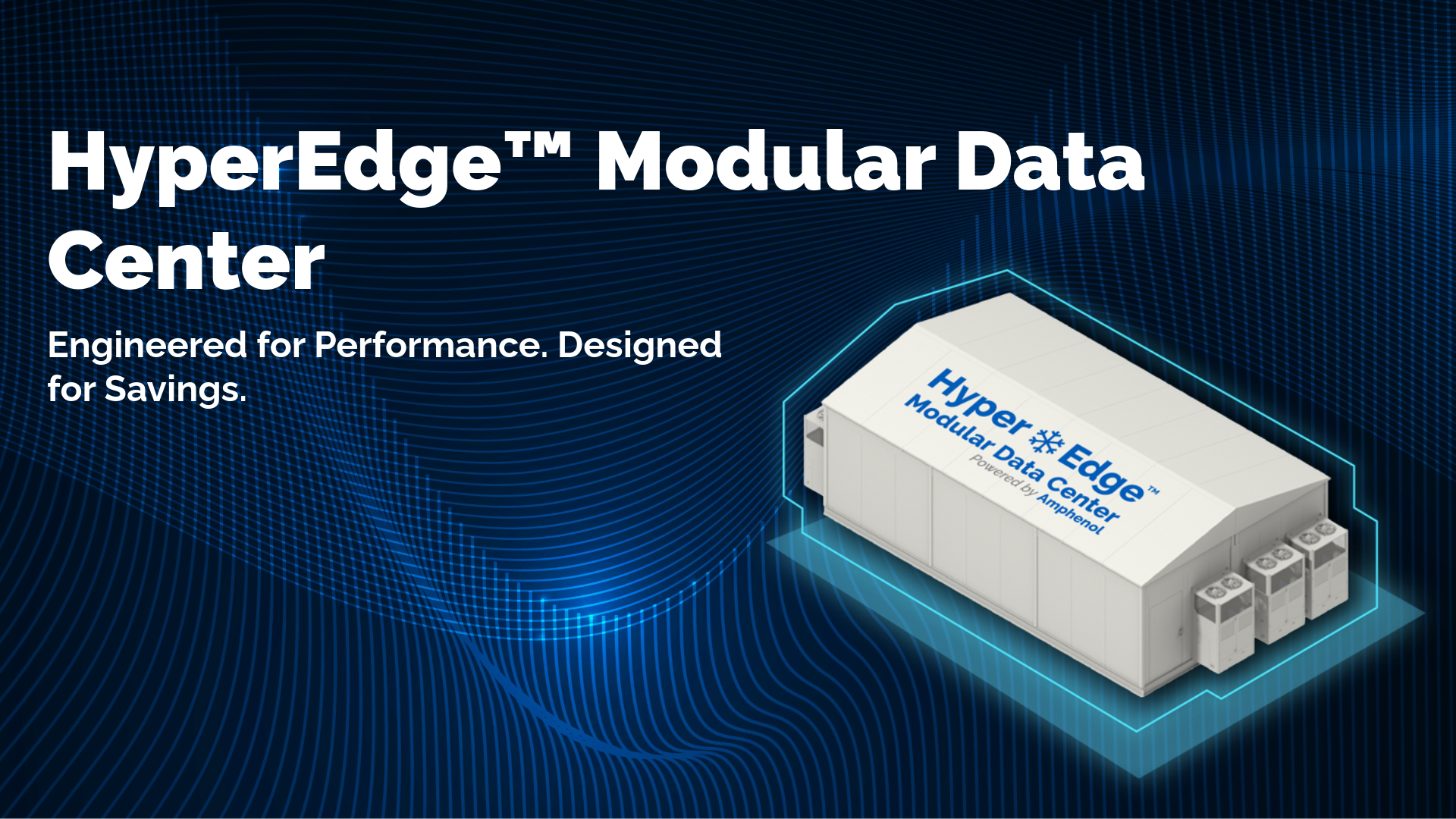
Amphenol Charles Industries engineered the HyperEdge™ Modular Data Center around this philosophy, supporting scalable thermal management, flexible equipment configurations, and multiple deployment sizes to meet a wide range of applications. For deployments requiring high-density equipment support, HyperEdge™ MDC can be configured with the Amphenol Charles Industries 4-Post Seismic Rack, offering flexible rack integration with support for power panels, fiber panels, cable management, and a Zone 4 seismic-rated design.
Performance Beyond the Data Center
Edge infrastructure often operates in environments where reliability matters just as much as performance.
Whether equipment is deployed in remote locations, regions with severe weather, or areas with demanding environmental requirements, the enclosure itself plays an essential role in protecting critical assets.
For that reason, many modular data centers are engineered with structural integrity, rugged steel construction, advanced thermal management, and designs that support wind, snow, seismic, and fire requirements. HyperEdge™ MDC follows this same approach, combining welded steel construction with scalable cooling and environmental protection designed for demanding deployments.
Looking Ahead
The future of edge infrastructure is not simply about building more facilities. It’s about building infrastructure that can evolve alongside the networks it supports.
As organizations continue expanding digital services and artificial intelligence applications, modular data centers will play an increasingly important role in helping operators deploy infrastructure faster, scale more efficiently, and prepare for future growth.
HyperEdge™ MDC reflects that shift by combining modular design, flexible configurations, and engineered performance in a solution built for modern edge deployments.
If you’d like to learn more about HyperEdge™ MDC and how it supports edge infrastructure deployments, you can explore the product and its capabilities on our website.